Walking along a weathered cliffside or breaking open a loose stone in a dry riverbed reveals an ancient world trapped in mineral layers. Sedimentary rock acts as a natural archive, holding the preserved traces of creatures that swam through prehistoric seas millions of years ago.
Understanding what lies hidden inside these mineral formations transforms a dull grey boulder into a window deep into Earth history. Examining these shapes requires patience, a keen eye, and a basic grasp of how organic remains turn into solid stone over immense stretches of time.
The Wonders of Ammonite Spirals
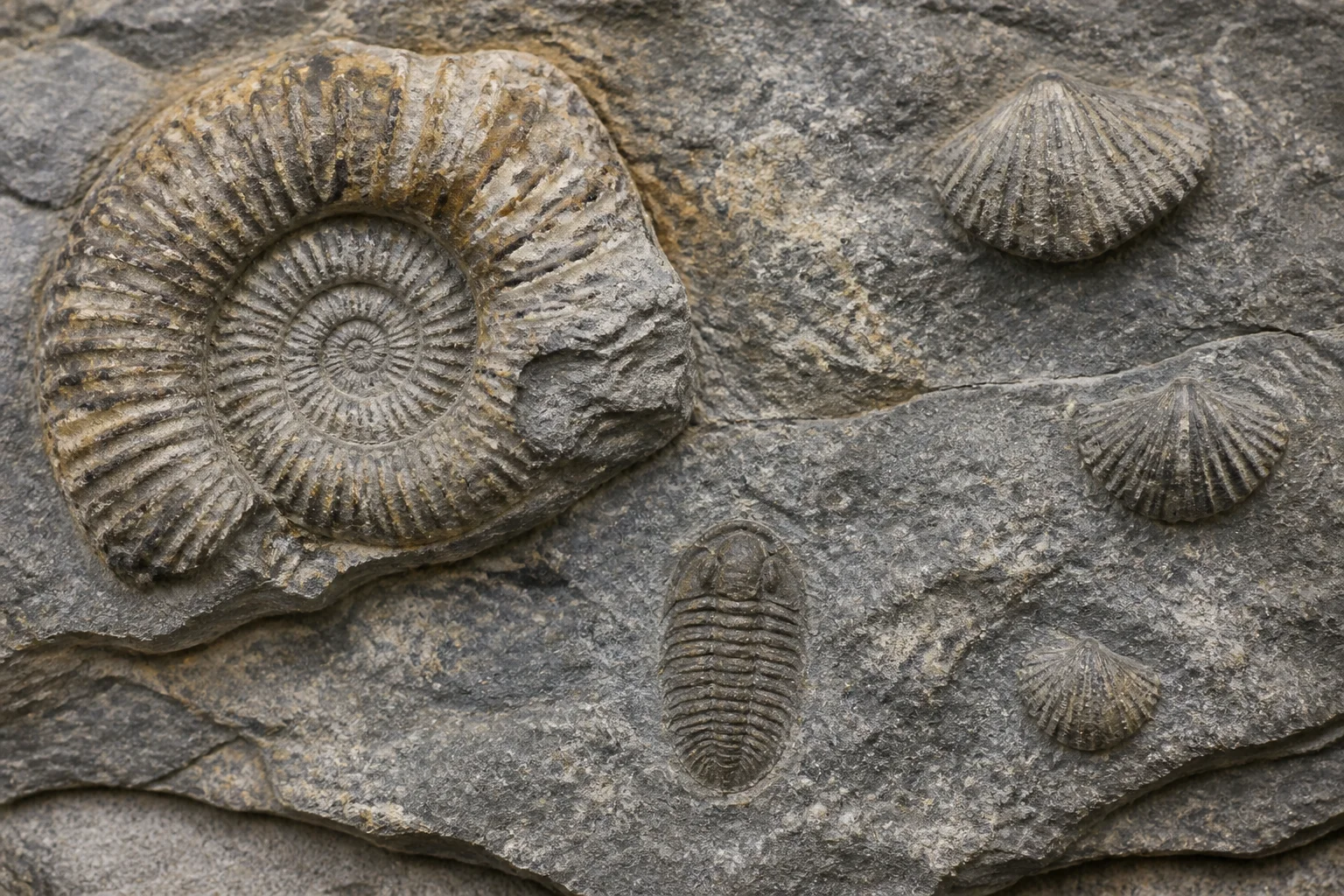
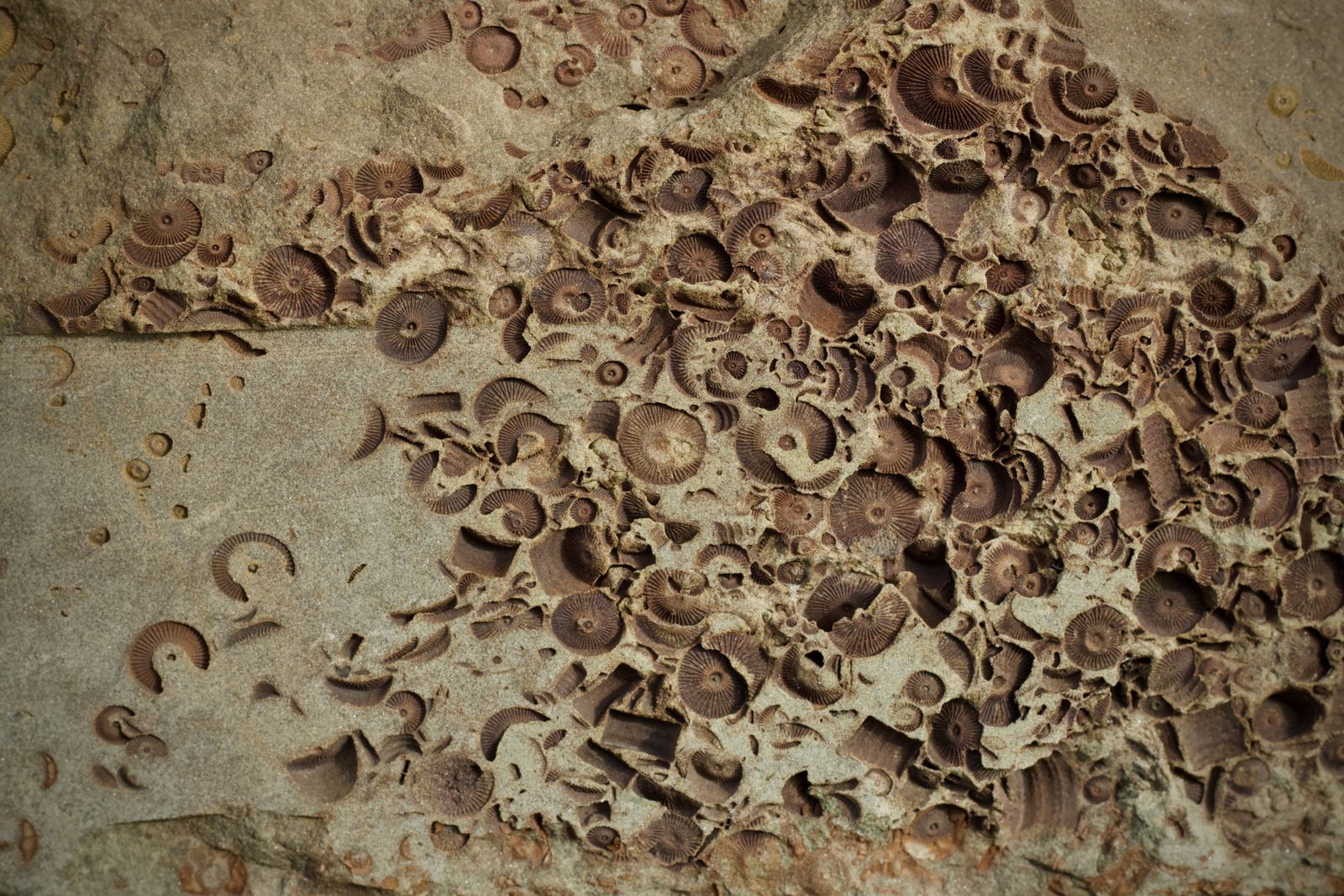
Ammonites rank among the most recognizable and striking fossils found in marine sedimentary layers. These extinct cephalopods feature tightly coiled shells marked by intricate suture lines that trace the internal chambers of the animal. When groundwater rich in minerals seeps into the buried shell, it replaces the original material with calcite, pyrite, or silica, leaving behind a heavy, durable replica.
Spotting an ammonite usually starts with noticing a circular pattern or a fragment of ribbed texture on the weathered surface of a rock. Coastal erosion often exposes these coiled forms along cliff faces where soft shale meets harder limestone. Cracking open the wrong stone ruins a good specimen, so inspecting the outer edges for exposed whorls before taking any hammer to the outcrop is essential.
Tracing Ancient Trilobite Segments
Trilobites inhabited Paleozoic oceans long before dinosaurs roamed the land, leaving behind segmented exoskeletons that readily broke apart after death. Finding a complete trilobite is a rare thrill because most discoveries consist of isolated head plates, tail sections, or scattered thoracic segments embedded in slate and siltstone.
The body of a trilobite divides into three distinct lengthwise lobes, a design that helps researchers classify the thousands of known species. Silt-heavy environments preserved these arthropods with remarkable clarity, capturing fine details of their compound eyes and defensive spines. Look for tiny, raised bumps and symmetrical ridges on flat grey rocks to locate these ancient arthropod remains.
Brachiopods and Bivalve Shells
Brachiopods and common clams often dominate fossiliferous limestone layers, showing up in dense clusters across entire bedding planes. Although brachiopods resemble modern clams at a glance, their internal anatomy differs fundamentally, featuring a specialized feeding structure called a lophophore. Distinguishing them from true bivalves involves checking the symmetry between the top and bottom valves.
Sedimentary layers packed with these hard shells formed on ancient shallow seafloors where shelly debris accumulated over countless centuries. Weathering often releases individual shells from the surrounding matrix, leaving perfect little stone replicas scattered across the soil below a rock outcrop. Examine the hinge areas and growth lines to determine whether the specimen belongs to a symmetrical brachiopod or an asymmetric bivalve.
Key Features of Fossil Preservation
Fossilization rarely happens by accident, requiring specific chemical and physical conditions immediately after the organism dies. Rapid burial by fine sediment protects the remains from scavengers and destructive surface weathering, setting the stage for mineral replacement over time.
- Mineral-rich groundwater flowing through porous sediment
- Complete exclusion of oxygen in deep water basins
- Sturdy original shell material made of calcium carbonate
- Gentle compaction of mud layers around the specimen
- Slow erosion revealing the hardened stone shape later
- Absence of intense heat or extreme tectonic pressure
Each type of sediment influences the final appearance of the fossil trapped within its mass. Sandstone often leaves rough, grainy molds, whereas fine-grained mudstone preserves delicate surface textures and microscopic structural details with astonishing precision.
Where to Look for Sedimentary Layers
Discovering fossils depends entirely on finding the right type of rock exposed at the Earth surface. Road cuts, active quarries, riverbanks, and coastal cliffs offer the best views into stratified geological layers because natural or artificial excavation strips away the overlying soil.
Sedimentary formations span wide geographic areas, but marine fossils concentrate most heavily in ancient seabeds now elevated high above sea level. Check local geological maps to identify limestone, shale, or sandstone deposits dating back to eras rich in aquatic life before heading out into the field with a hammer and safety glasses.
Reading the stories written in stone takes time, but every identified shell or coiled ammonite adds another piece to the vast puzzle of planetary history. Treat every outcrop with respect, leave fragile geological formations intact for future observers, and let the quiet permanence of these ancient rocks ground your perspective.
Comments
Finding my first complete ammonite in the local quarry completely changed how I look at ordinary stones. This reference guide made identifying the intricate chamber lines so much easier during weekend hikes.
Jan de Vries
The breakdown of brachiopods and tiny bivalve shells helped me sort out the jumble of fragments in my backyard gravel. It is fascinating to realize how much prehistoric life hides in plain sight.
Sanne Bakker
I always struggled to spot trilobite fossils until I read the sections on recognizing distinct cephalon plates within limestone chunks. Now my family checks every rock face we pass along the coast.
Femke van Dijk